For More Information about honors biology tutoring book a free consultation
DiHybrid Crosses
DiHybrid crosses trip up a lot of honors biology students. Here's a clear walkthrough of how to set them up and solve them without getting lost in the Punnett square.
TOPICS
Understanding Dihybrid Crosses: A Systematic Approach
In my five years of tutoring honors biology students, dihybrid crosses are consistently one of the challenging topics students ask about. Students who easily work through monohybrid crosses often struggle when asked to track the inheritance of two traits at the same time.
Here's what I've learned: although the difficulty can stem from lacking an understanding of the of genetic principles, it can also be about the method. The good news is learning the steps of the method is usually an easy fix.
The Common Obstacle
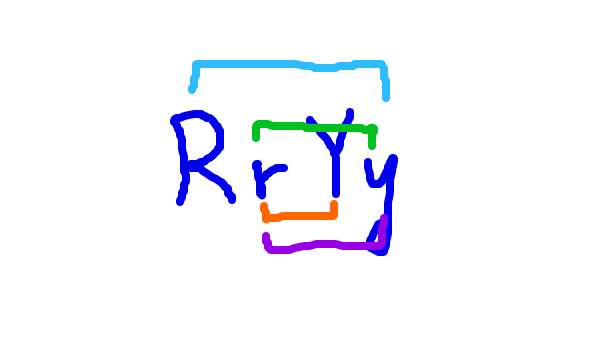
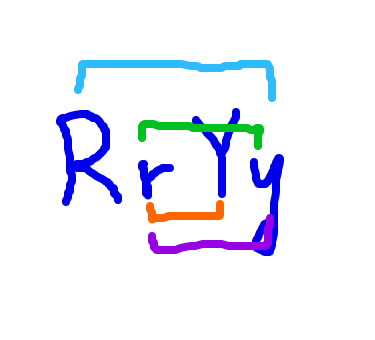
The confusion typically arises during gamete formation. When presented with a heterozygous parent for both traits (say, RrYy) students must determine all possible gamete combinations. This is the critical step where most errors occur, and it's completely understandable why.
A Methodical Solution
The key lies in applying the principle of independent assortment: each gamete receives exactly one allele from each gene pair.
For a parent with genotype RrYy:
One allele from the first gene (R or r)
One allele from the second gene (Y or y)
This yields four distinct gamete types: RY, Ry, rY, and ry.
I always tell my students to write out all possible gametes for both parents before beginning the Punnett square. This step transforms what feels like an overwhelming problem into a straightforward exercise.
The Underlying Pattern
Success with dihybrid crosses depends less on memorization and more on methodical execution. When you invest time in careful setup, the completion becomes almost routine.
If you're working through honors biology and finding it challenging, I'd be happy to help.

© 2026. All rights reserved.